What a pool heat pump does
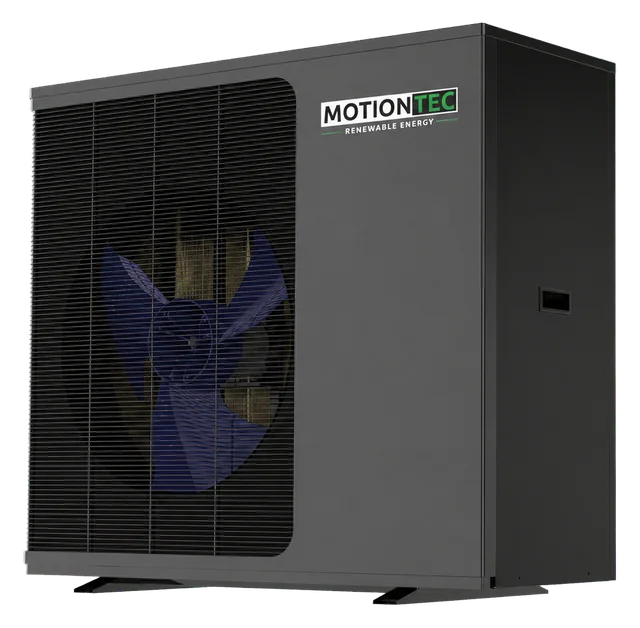
A pool heat pump is an air-to-water heat pump built for swimming pools: it takes heat from outdoor air and transfers it to pool water flowing through a titanium heat exchanger that resists chlorine and salt. Because pool water only needs 26–30 °C, the temperature lift is small and efficiency is high — COPs of 5–7 at the standard rating condition of 26 °C air, 26 °C water and 80 % humidity, and considerably more when an inverter unit runs at low speed.
What drives the heat demand
- Surface area: evaporation accounts for 60–70 % of an outdoor pool's heat loss, and a cover cuts it by 70–90 % — the single biggest lever.
- Target temperature and season: 26 °C from May to September needs a fraction of the energy of 30 °C year-round.
- Climate: average air temperature, wind exposure and humidity at the site.
- Volume: it sets the heat-up energy but matters less for steady-state losses than surface area.
- Indoor pools lose less heat but need dehumidification and ventilation heat recovery.
Rules of thumb for sizing
For a covered outdoor pool in a temperate European climate used from late spring to early autumn, budget roughly 0.2–0.25 kW of heat pump output per m³ of water: about 10–12 kW for a 48 m³ pool measuring 8 × 4 × 1.5 m. Add 30–50 % for an uncovered pool, a windy site or a longer season, and size against the mild-season rating point (15 °C air / 26 °C water) rather than the summer figure. In Mediterranean and Middle Eastern climates 0.15 kW per m³ is often enough, while an outdoor pool kept warm through a Central European winter may need double. Above about 100 m³, calculate the losses properly instead of scaling the rule.
Estimating heat-up time
Heating water takes 1.163 kWh per m³ per kelvin. Raising a 48 m³ pool by 10 K therefore needs about 560 kWh; a heat pump delivering 12 kW net after ongoing losses takes roughly 47 hours, so plan two to three days for the initial heat-up and keep the cover on. Once at temperature, the unit only has to replace daily losses — typically 1–2 K per day for a covered pool.
Inverter or on/off?
An on/off pool heat pump runs its compressor at full speed and cycles to hold the setpoint. It is cheaper and simple, but each start draws high current, cycling wears the compressor and the average COP sits around 5. A full-inverter unit modulates compressor and fan speed from about 20 % to 100 %, matching output to losses; running slowly most of the time, it reaches seasonal COPs roughly 20–40 % higher, is markedly quieter — often 10 dB(A) less at part load — and heats up faster in boost mode.
Inverter units cost more upfront but usually repay the difference within a few seasons where the pool is used regularly. Many are reversible and can also chill the water in very hot climates, which makes them the default choice for the Gulf and North Africa.
Running costs: a worked example
Take the 48 m³ covered pool in a temperate climate, heated to 28 °C from May to September. A seasonal heat demand of about 4,000–6,000 kWh at an average COP of 5–6 means 700–1,200 kWh of electricity. At €0.25 per kWh that is roughly €175–300 per season; leaving the pool uncovered can double it, and an on/off unit at COP 4 adds another 25–40 %. Pairing the heat pump with a PV or PV-T system that produces most in the same months lowers the bill further.
Installation tips
Fit the heat pump after the filter and before any chlorinator, with a bypass valve to set the design flow — usually 4–8 m³/h for a 10–15 kW unit. Place it outdoors with the stated clearance so the cold discharge air is not recirculated, provide a condensate drain, keep pipe runs short and insulated, and match the electrical supply and residual-current device to the nameplate. Drain the exchanger before frost unless the unit is designed for winter operation. Check the sound power level with neighbours in mind, and choose the refrigerant according to the destination market: in the EU, monoblock heat pumps up to 50 kW containing refrigerants with a GWP of 150 or more, including R32, may not be placed on the market from 2027, which is why R290 pool heat pumps are gaining ground.
Frequently asked questions
What size heat pump do I need for a 50 m³ pool?
For a covered outdoor pool used through a temperate summer season, about 10–13 kW of heating output. Plan 15–18 kW if the pool is uncovered, exposed to wind or heated for a longer season, and less in hot climates.
Is an inverter pool heat pump worth the extra cost?
Usually yes if the pool is used regularly. Inverter units achieve seasonal COPs 20–40 % higher than on/off models, run much more quietly at part load and put less wear on the compressor, so the price difference is normally recovered within a few seasons.
How long does a pool heat pump take to heat a pool?
Use 1.163 kWh per m³ per kelvin: a 48 m³ pool raised by 10 K needs about 560 kWh, or roughly two days with a 12 kW unit and the cover on. After that the heat pump only replaces daily losses.
What COP does a pool heat pump achieve?
Around 5–7 at the standard rating point of 26 °C air and 26 °C water, and about 4 at 15 °C air. Full-inverter models running at low speed can exceed COP 10 under the 26/26 condition.